A small CNC mill on 3D-printer electronics
I ordered a cheap desktop mill kit and decided not to use the dubious LPT drivers that came with it.
I lost it and ordered myself a cheap and small home milling machine, a DIY mini CNC kit from AliExpress.
It will probably be delivered in a couple of months.
All that is left is to figure out what for, where to put it, and whether it is time to start renting a garage.
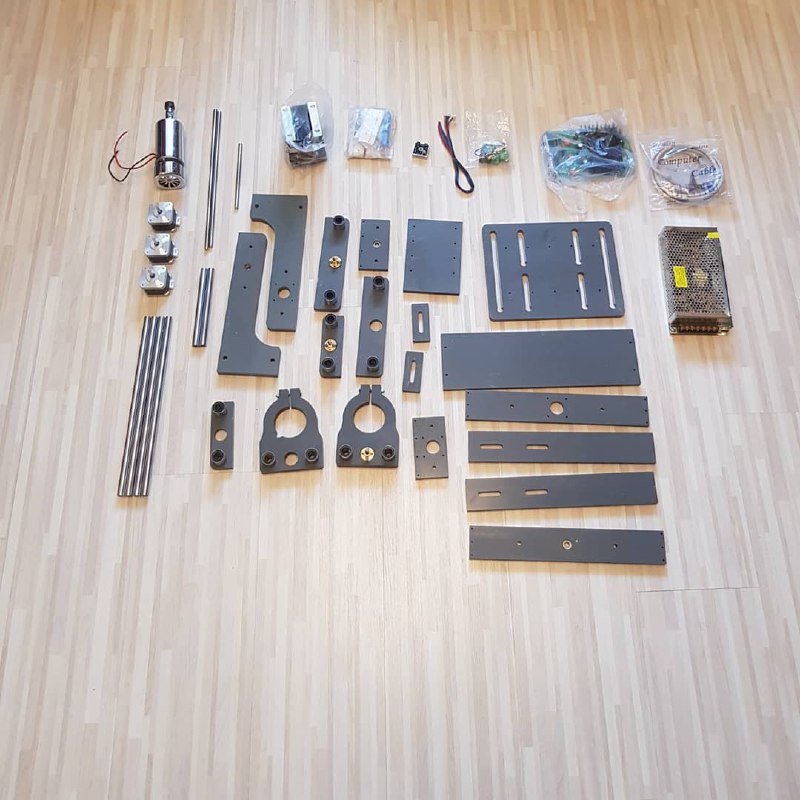
The parts arrived
The mechanics are assembled. Now the electronics are left. I do not want to use the dubious drivers controlled over LPT, so I will use electronics from a 3D printer. And I will control the spindle through a relay.
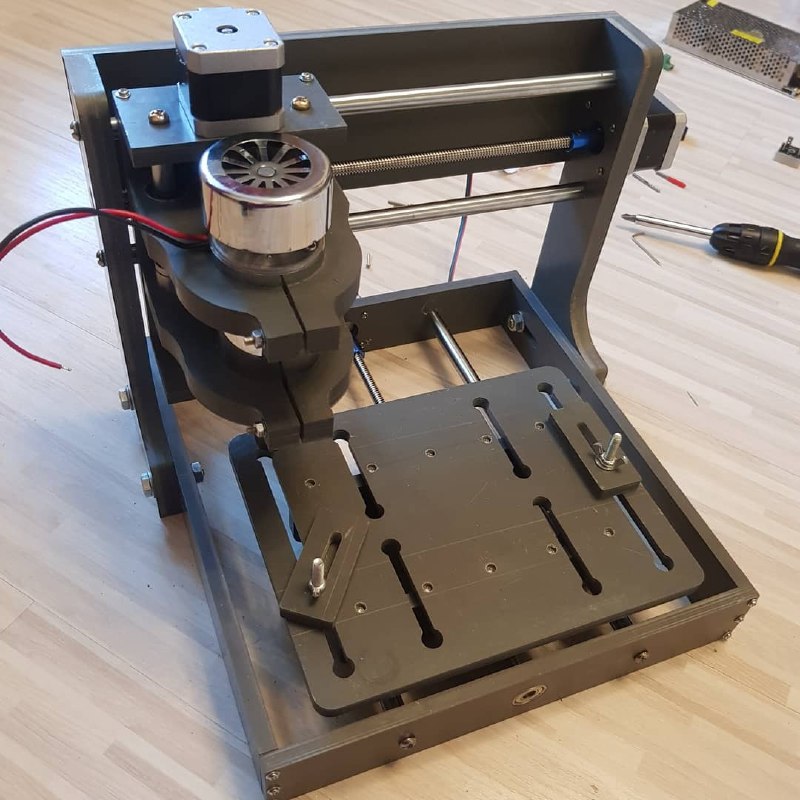
A week later: the electrics are assembled, and the magic smoke has not come out (yet). The spindle eats a separate 36V at 9k rpm. Next up is fixing the firmware and the software...
By the way, if anyone knows where to find a power supply with 5V, 12V and 48V outputs at once, and even better with software switch-off of the 12V and 48V lines, I will say thank you.
More parts
I have not written anything for a long time, but nothing is happening with me either. The only news is that a batch of parts for the mill and the printer arrived. What came:
- A 3D Touch auto-levelling probe. A fun thing: it connects like a servo, can extend a probe and understands when it has hit the bottom.
- A magnetic build surface for printed objects. I am fed up with replacing PEI sheets (changed it just once and here we go again), so I decided to try this. The idea is nice: you print, then simply peel off the flexible sheet and pick the print off it. I do not know how it will work with the 3d-touch, my hypothesis is badly.
- A bunch of TMC2130 drivers, to drive the motors in the mill. After I liked them on the printer, I decided they have to go everywhere.
- A small screen for the mill, like on the printer: a reprap full graphics smart controller. The best thing for its size, and the sd card goes into it too.
- A bunch of endstops for the mill (something in me says that sooner or later things will go badly without them).
- A DCDC mosfet module for connecting the laser to the printer and matching the PWM levels (I know this solution is nonsense and an optocoupler is what it needs, but...)
- A nice flexible cable chain for the wires of the printer (or the mill, somewhere).
- An arduino due, an extra one will not hurt. In case I find that 8 bits are not enough for the mill.